You Won’t Believe This Hidden Festival Culture in Arequipa
Nestled between volcanoes and steeped in colonial charm, Arequipa, Peru, hides a festival soul few travelers ever witness. I didn’t expect to stumble upon street processions with centuries-old roots, vibrant masks, and music that echoes through canyon walls. This isn’t the typical tourist trail—it’s raw, real, and deeply rooted in Andean tradition. If you're chasing authentic cultural moments beyond the guidebooks, Arequipa’s festival scene will blow your mind. Let me take you where most never go.
The Soul of Arequipa: More Than Just White Stone
Arequipa is often celebrated for its architectural grandeur, its buildings carved from sillar—soft white volcanic stone that glows at sunrise and blushes at dusk. The historic center, a UNESCO World Heritage Site since 2000, unfolds in a harmonious blend of Spanish colonial design and indigenous craftsmanship. Yet behind the stoic facades of its churches and monasteries beats a living, breathing cultural heart: its festivals. These are not staged performances for visitors but deeply embedded expressions of faith, identity, and community.
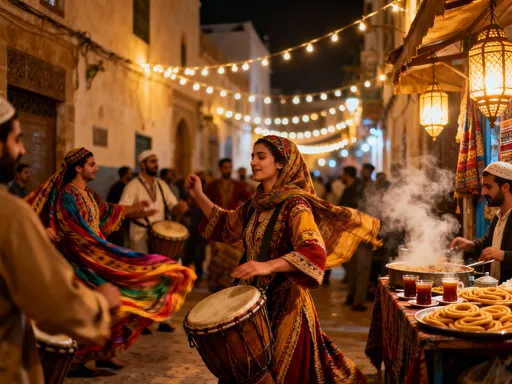
When festivals arrive, the city transforms. Cobblestone streets once quiet with morning mist fill with color and sound. The scent of copal incense drifts from open church doors, mingling with the aroma of roasting corn and spiced meat from roadside stalls. Brass bands tune their instruments in preparation for processions, their notes bouncing off the high walls of the Rio Chili gorge. Women in wide, embroidered polleras—traditional skirts—walk with quiet dignity, their layered dresses swirling with every step. Children clutch hand-carved wooden flutes, practicing melodies passed down through generations.
What makes Arequipa’s festival culture unique is its rootedness in both Catholic tradition and Andean cosmology. Centuries of cultural fusion have created celebrations that honor saints while also acknowledging Pachamama, or Mother Earth. The rhythm of life here follows agricultural cycles and religious calendars in equal measure. In this city of stone, faith is not confined to Sunday masses—it spills into the streets, into music, into dance, and into the daily lives of its people.
Semana Santa: Faith, Fire, and Family
No festival in Arequipa captures the soul of the city more profoundly than Semana Santa, or Holy Week. While Easter celebrations occur across Latin America, Arequipa’s observance stands out for its emotional depth, communal participation, and sensory richness. The week begins quietly on Palm Sunday, with families gathering in local plazas to bless palm fronds. But by Wednesday night, the city begins to shift. Churches open their doors for extended prayer vigils, and neighborhoods prepare for the solemn processions that will unfold each evening.
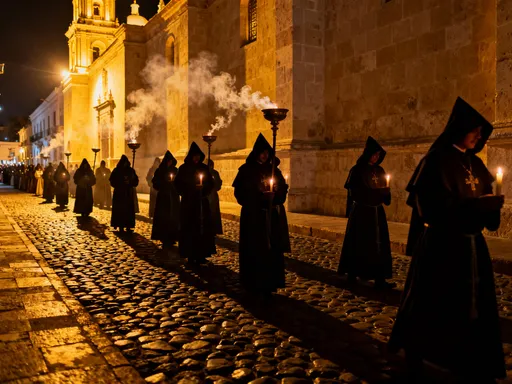
The most moving of these is the procession of the Señor de los Temblores—Lord of the Earthquakes—a small black statue of Christ housed in the Basilica Cathedral. Venerated since the 17th century, this image is believed to have protected the city during past seismic disasters. On Holy Monday, it is carried through the streets in a wooden carriage draped in red velvet, accompanied by hundreds of penitents dressed in purple robes and hoods. The air grows thick with candlelight as thousands line the route, many kneeling in prayer as the image passes.
What strikes visitors most is not the spectacle, but the silence. There are no loudspeakers or commercial interruptions—just the steady beat of drums, the low hum of choral chants, and the occasional sob from a devotee overcome with emotion. Families stay up late, sharing meals of chupe de camarones, a creamy shrimp stew rich with Andean cheese, milk, and aji peppers. It’s a dish prepared only during this week, linking food to faith in a deeply personal way.
For the people of Arequipa, Semana Santa is not about tourism or pageantry. It is a time of reflection, of family reunions, and of reaffirming one’s place within a spiritual and social fabric that stretches back generations. The city slows down. Shops close early. Even the usual bustle of the Mercado San Camilo quiets as vendors return home to pray. To witness this is to understand that in Arequipa, tradition is not preserved in museums—it lives in the hearts of its people.
Virgen de la Candelaria: A Southern Twist
While Puno’s Virgen de la Candelaria festival draws international attention each February, Arequipa celebrates its own version with equal passion—and a distinctly local flavor. Held annually on February 2nd, this festival honors the Virgin of Candelaria, a devotion brought from Bolivia and deeply embraced in the southern Andes. In Arequipa, the celebration unfolds not in a single grand parade, but in a mosaic of neighborhood events, each organized by local dance brotherhoods known as comparsas.
One of the most striking dances is los cholos, performed by men in elaborate costumes that blend indigenous and colonial elements. Dancers wear tall, conical hats adorned with mirrors and ribbons, bright satin jackets, and pleated skirts that mimic women’s traditional dress. Their movements are playful yet precise, a satire of colonial-era mestizo elites. Another prominent dance is the morenadas, whose origins trace back to Afro-Bolivian communities. Dancers wear heavy, ornate masks depicting exaggerated facial features and carry caskets symbolizing the suffering of enslaved miners. The rhythm is driven by deep, resonant drumbeats and the jingle of tin waistcoats, creating a sound that pulses through the city’s arteries.
Unlike the highly choreographed performances in Puno, Arequipa’s celebrations feel more intimate, more organic. You won’t find bleachers or ticketed viewing areas. Instead, families set up chairs on sidewalks, children climb onto balconies, and elders watch from doorways, nodding along to familiar tunes. The costumes are handmade, often passed down from grandparents, and the dances are taught in community halls rather than rehearsal studios. This is not entertainment—it is devotion, identity, and memory woven into motion.
The festival also includes small religious services in neighborhood churches, where the Virgin’s image is dressed in handmade lace and surrounded by offerings of flowers, candles, and local fruits. After the mass, the statue is carried through the streets in a modest procession, followed by dancers and musicians. There’s no rush, no schedule to keep—just the rhythm of faith and community. For those who experience it, the Virgen de la Candelaria in Arequipa is a reminder that culture thrives not in grand arenas, but in the quiet corners of everyday life.
Why These Festivals Stay Under the Radar
Given their richness, it’s surprising that Arequipa’s festivals remain relatively unknown to international travelers. Unlike Cusco, which draws millions to its Inti Raymi ceremony each June, or Lima, which promotes its coastal festivities globally, Arequipa’s celebrations unfold with little fanfare beyond local circles. The reasons are both practical and cultural. First, there is limited international marketing. While Peru’s Ministry of Tourism highlights Machu Picchu and the Sacred Valley, Arequipa’s festivals receive minimal promotion in global travel campaigns.
Language is another barrier. Most festival programs, announcements, and religious texts are in Spanish, with little translation available. Unlike in Cusco, where Quechua is widely spoken and often explained to tourists, Arequipa’s linguistic landscape is less accessible to non-Spanish speakers. This doesn’t diminish the experience—but it does require a willingness to engage without full understanding, which can be intimidating for some travelers.
Additionally, the city’s festival calendar doesn’t align neatly with peak tourist seasons. Semana Santa falls in March or April, outside the dry season when most visitors plan trips to the Andes. The Virgen de la Candelaria is in early February, a time when many tourists are still in coastal areas recovering from holiday travel. As a result, even those who visit Arequipa may miss these events entirely.
But perhaps the greatest reason these festivals remain hidden is their authenticity. They are not designed for outsiders. There are no English-speaking guides narrating the symbolism, no VIP viewing areas, no souvenir stalls selling mass-produced masks. Participation is organic, rooted in local faith and family tradition. This lack of commercialization is precisely what makes the experience so powerful—but it also means it doesn’t show up on curated travel itineraries. For the discerning traveler, this obscurity is a gift. It means you can witness a tradition that has not been shaped by tourism, where the emotions are real, the rituals are sacred, and the connections are genuine.
How to Experience Festivals Like a Local
For travelers seeking a meaningful encounter with Arequipa’s festival culture, preparation and respect are essential. Timing is key: plan your visit around major events like Semana Santa or the Virgen de la Candelaria. Both require advance booking for accommodations, as locals return home to participate and guesthouses fill quickly. Staying in a restored casona—a colonial-era mansion turned boutique hotel—near the Plaza de Armas offers both comfort and proximity to the main processions.
Engagement begins with observation. Arrive early to secure a respectful viewing spot, but avoid blocking doorways or private balconies. Dress modestly, especially during religious processions. While photography is generally allowed, always ask permission before taking close-up shots of participants, particularly during moments of prayer or ritual. Many dancers and devotees welcome photos if approached politely, but remember that this is not a performance—it is an act of faith.
Food is a gateway to connection. Seek out family-run food stalls during festivals, where dishes like rocoto relleno, adobo arequipeño, and queso helado are prepared fresh. These are not just meals—they are part of the celebration. Sharing food with locals, even through gestures and smiles, builds trust and opens doors to deeper interactions. If invited into a home, accept with gratitude. Such invitations are rare and meaningful.
Transportation during festivals can be unpredictable. Public buses may reroute, and taxis are in high demand. Walking is often the best option, but be mindful of processional routes and temporary road closures. The city moves at a different pace during these times—slower, more deliberate. Embrace it. Let the rhythm of the festival guide your day. Attend a neighborhood mass, listen to the music, and allow yourself to be present. The most profound experiences often come not from seeing everything, but from feeling a part of something greater.
The Deeper Meaning Behind the Music and Masks
Beneath the vibrant costumes and energetic dances lies a complex web of symbolism and history. In Arequipa’s festivals, every element—from the color of a ribbon to the shape of a mask—carries meaning. The morenada dancers, for instance, wear grotesque masks with protruding tongues and wide eyes, not for theatrical effect, but as a representation of the suffering endured by African slaves in colonial-era mines. The caskets they carry symbolize the miners who died far from home, their bodies never returned to their families.
Similarly, the dance of los cholos uses satire to navigate cultural identity. By dressing men in women’s skirts and exaggerating colonial fashion, the dance critiques the social hierarchies of the past while celebrating mestizo resilience. The mirrors on their hats reflect light—and truth—suggesting that identity is multifaceted and ever-changing. These dances are not merely entertainment; they are oral histories performed through movement.
Music, too, carries ancestral memory. The use of wind instruments like the pinkillo and the tarka connects modern celebrations to pre-Columbian traditions. The rhythms of the bombo drum echo across the Andes, uniting communities in a shared sonic language. Even the chants sung during processions often blend Quechua phrases with Spanish lyrics, a linguistic fusion that mirrors the cultural blend of the region.
These symbols are not static. They evolve with each generation, as young dancers learn the steps from elders and adapt costumes to include new materials. Yet the core message remains: memory matters. In a world where globalization threatens to erase local identities, Arequipa’s festivals serve as living archives, preserving languages, stories, and worldviews that might otherwise fade. To witness them is to participate in an act of cultural resistance—one that is joyful, communal, and deeply necessary.
Preserving Tradition in a Changing World
Like many traditional cultures, Arequipa’s festival practices face challenges in the 21st century. Urbanization, migration, and the allure of modern life have led some younger generations to view these celebrations as outdated. Fewer children are learning the dances, and some comparsas struggle to recruit new members. At the same time, increased interest from tourists raises concerns about commercialization. There is a fear that rituals may be shortened, simplified, or performed out of season just for visitors—turning sacred acts into spectacles.
Yet there are also signs of hope. Local schools and cultural centers have begun offering workshops in traditional music and dance. Community leaders are documenting oral histories and recording performances to preserve them for future generations. Some families now film their participation in processions, not just for memory, but as a way to pass down stories to children living abroad.
Technology, often seen as a threat to tradition, is also becoming a tool for preservation. Social media allows comparsas to share photos and videos, attracting younger participants who might otherwise feel disconnected. Crowdfunding platforms have helped finance the repair of aging costumes and instruments. These efforts show that tradition does not have to mean stagnation—it can adapt without losing its essence.
The key to sustainability lies in respectful engagement. Travelers who come with curiosity rather than expectation, who listen more than they speak, and who support local artisans and families contribute to the continuity of these traditions. When tourism becomes a bridge rather than an intrusion, it can help ensure that Arequipa’s festivals remain vibrant for generations to come.
The story of Arequipa’s festival culture is not one of preservation in amber, but of living evolution. It is a culture that honors the past while embracing the present, that finds strength in community, and that expresses faith through art, music, and shared memory. These festivals are not hidden because they are lost—they are hidden because they are protected, cherished by those who live them every day.